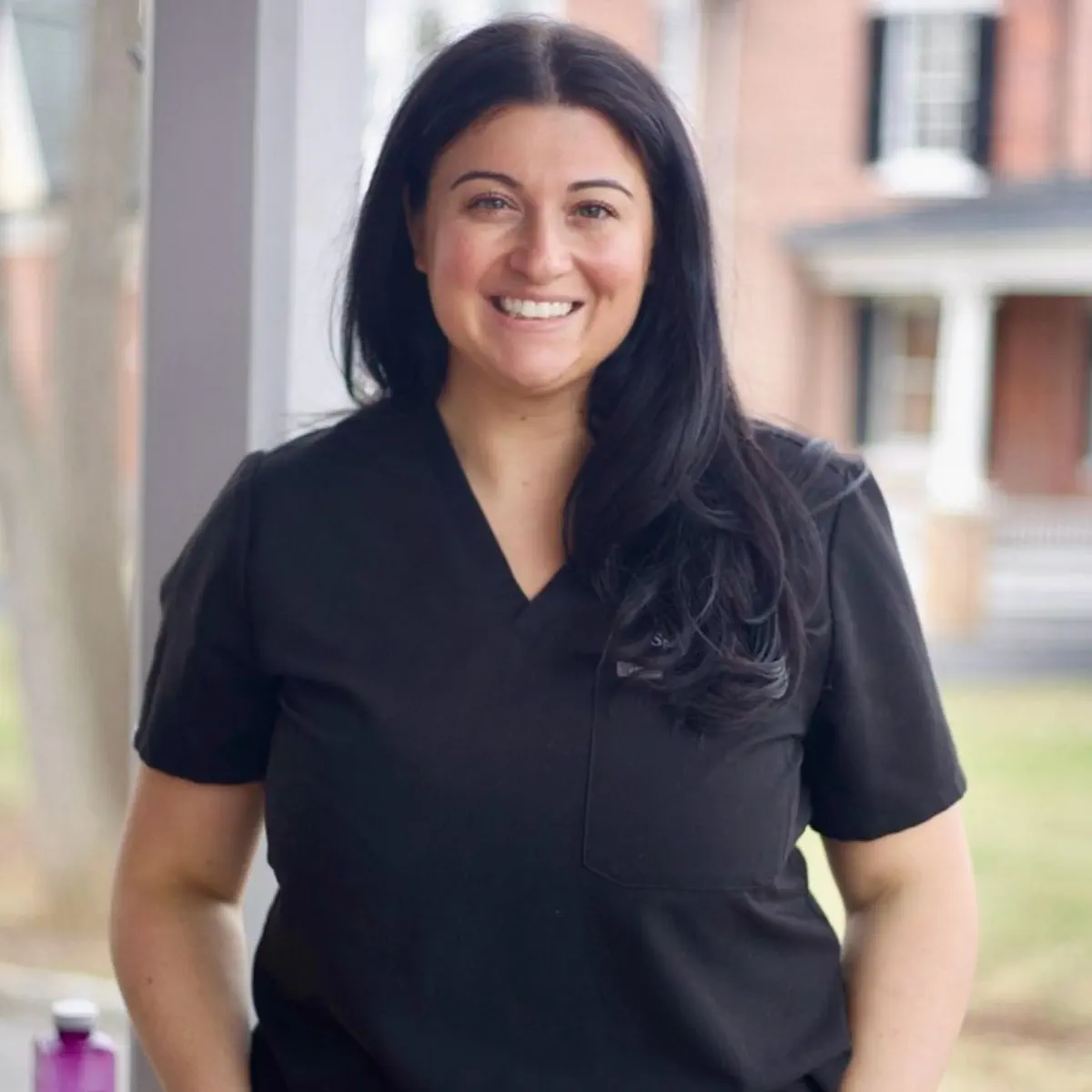
Danielle Pugliese, speech-language pathologist and owner of Speech In Reach, returned to one idea again and again on The All About Kids Podcast: becoming a confident clinician isn’t about mastering everything at once, it’s about learning how to adapt, manage reality, and give yourself permission to grow, especially in moments of disruption.
Speaking as a relatively new clinician navigating her clinical fellowship during the COVID-19 pandemic, Danielle reflected on what it felt like when in-person therapy abruptly stopped, schedules were flipped overnight, and teletherapy became the only option with little time to prepare and no roadmap for what “success” was supposed to look like.
Teletherapy forced a reset on perfection
When therapy moved online, Danielle was quick to point out that the hardest part wasn’t learning the platforms or using digital materials, it was letting go of the expectation that sessions needed to look the same as they did in person. Kids weren’t meant to sit in front of a screen for 30 minutes. Parents were overwhelmed. Clinicians were exhausted.
Rather than chasing perfect sessions, Danielle reframed success. If she planned three activities and completed two, that was a win. If a child stayed engaged long enough to earn a game at the end, that mattered. The pandemic made it clear that flexibility wasn’t lowering standards—it was meeting kids where they were.
“Any intervention is better than nothing”
One of Danielle’s most grounding lessons from this period was learning not to measure progress too rigidly. Teletherapy didn’t allow for the same level of control, but it still allowed for connection, cueing, modeling, and meaningful interaction. Even during games or unstructured moments, therapy was happening.
That mindset shift away from all-or-nothing thinking helped reduce stress for everyone involved. It also allowed families to stay engaged without feeling like they were failing if a session didn’t go perfectly.
Parents became partners in a new way
Teletherapy changed the parent dynamic. Danielle described how children often behaved differently with a parent nearby, sometimes making sessions harder but also more revealing. For early intervention especially, the virtual format created space for true parent coaching, with extended time to talk through strategies, model techniques, and collaborate more intentionally.
What felt like a limitation at first ultimately strengthened the carryover between sessions and daily life.
The learning curve didn’t stop at clinical skills
Beyond therapy itself, Danielle spoke candidly about the parts of the job that surprised her most: documentation, billing, scheduling, and time management. The pandemic amplified these demands, forcing her to use small pockets of time efficiently and build systems that worked, even from her living room.
Looking back, she credits this period with accelerating her professional growth. The pressure was real, but so was the learning.
Growth requires humility
As a clinical fellow, Danielle emphasized the importance of letting go of the belief that you need to know everything. The pandemic reinforced this lesson quickly. New platforms, new challenges, new behaviors, there was no manual. Admitting when you didn’t know something, researching it, and coming back with better answers became a strength, not a weakness.
The takeaway
Danielle Pugliese’s conversation is a reminder that growth in speech therapy doesn’t come from control or perfection—it comes from adaptability, honesty, and reflection. The pandemic forced early-career clinicians to grow up fast, but it also clarified what matters most: flexibility, connection, realistic expectations, and giving yourself room to learn. For SLPs looking back, the lesson is clear: progress happens when you stop chasing perfect sessions and start valuing sustainable ones.
Check out the full episode with Danielle Pugliese below on The All About Kids Podcast: