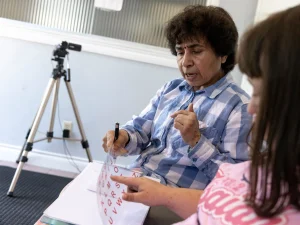

Shannon Kennedy, a certified speech-language pathologist and former clinical fellow at All About Kids, shared a clear theme throughout her conversation on The All About Kids Podcast: progress happens fastest when therapy feels doable for families, and when parents understand the “why” behind what an SLP is doing.
Start small, build trust
One of Shannon’s biggest recommendations was to avoid overwhelming parents on day one. Instead of walking into a home and listing everything a family “needs” to change or buy, she emphasized introducing strategies gradually. In her experience, parents are more receptive when the approach is realistic and collaborative, small steps that fit into real life.
Invite parents into the session (and narrate what you’re doing)
Shannon highlighted the value of involving parents directly in early intervention. She described intentionally modeling strategies during play and then pausing to explain what’s happening underneath the surface. Sometimes, therapy can look like “just playing,” so she’ll stop and say, essentially: Here’s what I’m targeting and why. That quick explanation helps parents connect the activity to communication goals, and makes it easier for them to repeat strategies between sessions.
Be flexible and use what families already have
A pivotal moment Shannon shared came from a simple example: she was playing with a child using toy cars, but the child wasn’t very verbal and didn’t want to engage with the car ramp that was put away. Instead of forcing the plan, Shannon adapted in the moment, she grabbed a book and turned it into a ramp, using it to model early concepts like “up,” “down,” “under,” and “over.” The parent’s reaction stood out: Why did you think to use a book like that? Shannon’s answer was straightforward, she followed the child’s interest and made something familiar feel new.
Read parent reactions and prevent misunderstandings
Shannon also talked about how much the parent-therapist dynamic matters. She pays attention to parent reactions and body language during sessions, because miscommunication can happen even when everyone has good intentions. In one example, she noticed parents watching closely when she paused after modeling “I want…” She realized they might have interpreted her technique as withholding items until the child spoke. She clarified that she was only pausing briefly—just long enough to encourage any communication signal (like eye contact or a sound)—and she could visibly see the parents relax once the misunderstanding was cleared up.
The takeaway
Shannon’s insights are a reminder that effective speech therapy isn’t just about what happens during the session, it’s about what families feel confident doing after the SLP leaves. By meeting parents where they are, modeling strategies in real time, staying flexible with materials, and communicating clearly, she focuses on building skills in a way that supports both the child and the people guiding them every day.
Check out the full episode with SLP Shannon Kennedy below: