From Curiosity to a Calling in Speech Pathology
How do you go from helping one child communicate to overseeing entire programs?
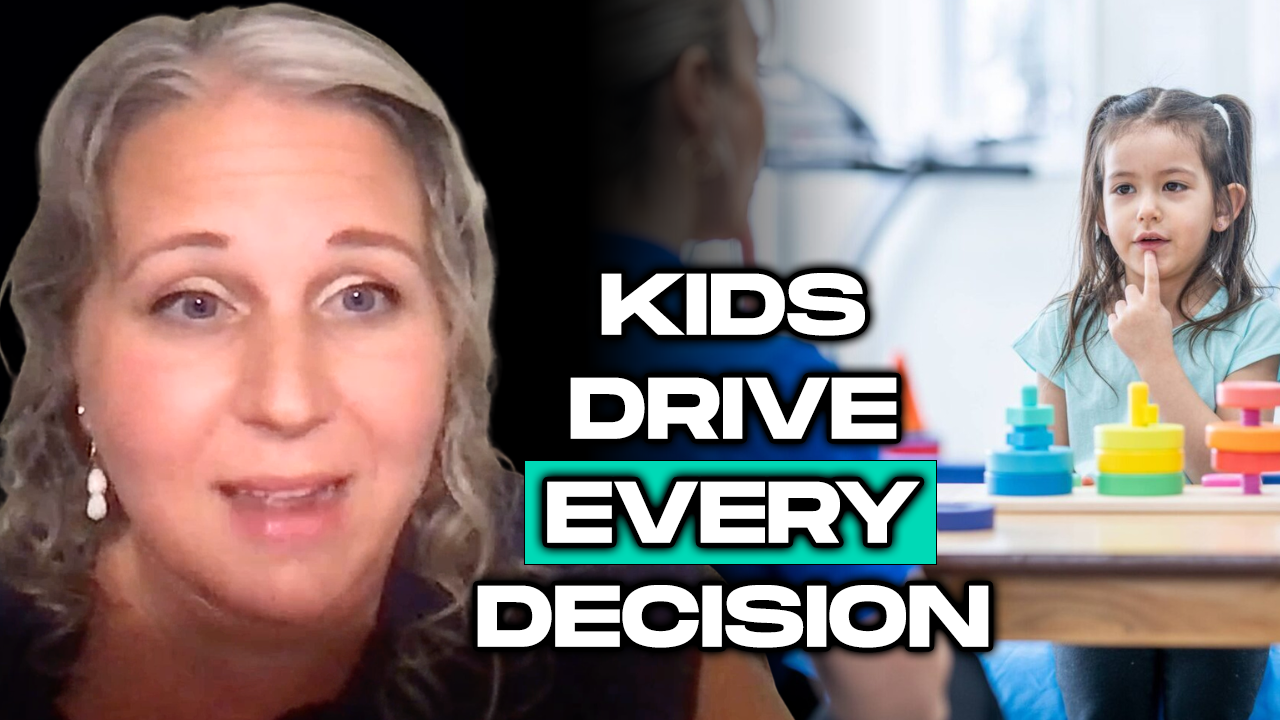
For Eileen Lombardo-Young of All About Kids, the answer is simple, but not easy: never lose sight of the child behind every decision.
Eileen found speech-language pathology as a teenager. At sixteen, she worked as a classroom aide with autistic children whose ways of connecting fascinated her. Autism awareness was limited, and online information wasn’t super accessible, so she asked her mother to drive her to the library that night.
What began as curiosity soon became a calling.
Her early career included supporting autistic students ages six through twenty-one, followed by preschool services, evaluations, camps, teletherapy, and clinical supervision. Working across so many different ages helped Eileen get a handle on the true meaning of being able to communicate: helping people express their wants, share ideas, and connect with others.
These early experiences also showed Eileen that good early intervention can establish foundations that help a child across a lifetime.
One child really made that lesson sink in for her.
After communicating mostly through physical behavior and imitating sounds, this child learned to use an augmentative and alternative communication (AAC) device.
Then, near age six, spoken language emerged.
“We implemented an AAC device,” says Eileen, “and he picked it up so quickly. By four or four and a half, he was readily using multiple augmentative systems, and by six, boom, he started speaking. It was just mind-blowing.”
That breakthrough reinforced Eileen’s belief that providers can’t predict when connections will click, which is why it’s so important to keep learning as a provider and trying new things to help children communicate.
Clinical Care & Crisis Leadership
That clinical perspective now shapes how she oversees early intervention, preschool, and school-age programs.
Assignments, workflows, staffing, and documentation may look purely administrative, but Eileen traces each task back to her one-on-one experience as a provider.
She also emphasizes that supporting children requires giving providers the support that they need.
Eileen’s job as a mother reinforces that perspective, which, for her, keeps family and work connected.
“I am just as much about the providers as I am the kids,” she says. “Yes, it’s All About Kids, but without the providers, we can’t get to those kids… I work just as hard at being a mom as I do being a Director and a Speech Therapist. It’s putting the work in and balancing it all.”
COVID-19 tested that philosophy in a way that All About Kids hadn’t been tested before.
The shutdown put an instant stop on in-person services and threatened fee-for-service revenue. Drawing on teletherapy experience from before the pandemic, Eileen helped All About Kids pivot rapidly.
“Thank God I had this background so we were able to jump in and help navigate it. Was it perfect? No,” she says.
“But people learned quickly and were surprised by how adaptable they were. After providing services in one manner for so many years, they were able to shift on a dime. As brutal as it was, it brought us together and showed us what we could accomplish and get through.”
The Industry’s Biggest Challenges… And Smallest Victories
Today, Eileen sees rates and provider shortages as urgent challenges in the industry.
Families can complete evaluations, learn their child qualifies for services, and still find that no therapist is available. For a field built around helping kids, passion alone can’t sustain providers. Agencies need to step up and advocate for a livable wage for providers and work-life balance that doesn’t lead to total burnout.
To cap off the episode, Eileen offers guidance in a Reddit-inspired “answer the internet” section.
She says grad school is not the finish line; the real learning starts once you leave the school setting. Aspiring therapists should also understand the profession’s demands, seek shadowing experience, and choose it for the tough but rewarding work that it is.
Also, parents should trust their instincts about provider fit and speak up early if things feel off.
Great therapists explain goals to parents, demonstrate progress, share strategies, and give parents the tools to help their kids communicate beyond the therapy session.
Eileen also gets into some of the harmful information spread on social media and why it’s always important to consult an expert when it comes to your child.
Despite challenges in the industry, Eileen remains hopeful about the future of child development. For her, progress lives in small victories: a child saying a sound correctly for the first time, filling a difficult-to-staff case, or giving a family a clear progress update.
Eileen’s journey shows that agencies thrive when their leaders stay connected to direct care.
It’s keeping the child in mind with every decision, so that the children, families, and providers get the support that they need.
More from Eileen
Discovering speech pathology
“And that night, I asked my mom to drive me to the library and I looked up what autism was. And that’s really what started the whole passion is working with kids on the spectrum who really have very low language and low ability to communicate. That’s what got me into applying for schools and going straight for speech.”
Preserving every child’s ability to communicate
“So I always look back at when you hear little kids and they’re not using words yet, you never know when that’s going to happen. And to what degree, nobody has that crystal ball, but it’s important to never lose the function of communication because then it could continue to grow and develop as that communication develops.”
Keeping children behind every decision
“Every decision, every thought process is about the kids. That’s why All About Kids just kind of connects with me because any decision you make, whether it’s about an assignment with this child and this provider, whether it’s about putting this program manager here or the way this workflow happens, it’s all to have a successful quality service being provided. We actually just brought some interns in today and we did an orientation and that’s the first thing I tell them.”
Adapting during COVID-19
“I think a lot of people learned a lot really quickly and were so surprised at themselves at how adaptable they were after providing services in one manner for so many years. They were able to shift on a dime and learn how to do a job that they’ve done for 5, 10, 20 years in a completely different capacity.”
Rates and sustainable wages
“Rates is a big one because people need to have a livable wage, and in our industry, we’re the helpers. We’re the ones who are going to do the job no matter what.”
Choosing the right therapist
“I think that initial connection is most important. If you have an expectation of someone working with your child, you have to go with that gut, that mother instinct, parent instinct. It’s okay if somebody doesn’t match with you.”
Why some talented providers burn out
“So, I think that kind of weeds out a lot quickly when their heart and their passion aren’t really in it, but they went in it because they thought it was a good profession. So, it’s one thing to have a good profession and it’s another thing to have a profession that’s good for you.
Social media bias
“And I think people in a lot of social media communities are showing the worst end of the spectrum, but that’s not the general experience. So when you’re going into your first IEP meeting or you’re a parent meeting with your child’s evaluators, they’re going to explain to you what the outcomes are. They’re not there to battle, they’re there to help you.”
What makes a therapist effective
“Your job as a therapist is to help the child communicate with everyone they need to do it with, not just you. You’re there to help facilitate that. So, the skill you teach generalizes to their family, to their school.”
Finding hope in the daily progress of the industry
“It’s the little things in the day to day that amount to the big things. It doesn’t need to be like, oh, all of a sudden we’re going to wake up and get this big change. I think it’s just to focus on the little hopeful things, and those overtime add up to the big things.”
All About Kids Podcast Links:
If you’re a provider (SLP, OT, PT, ABA, SEIT, Social Worker) looking to make a difference in the lives of children, apply to join the All About Kids team today: https://aakcares.com/careers/
For parents, do you have questions or concerns about your child’s development? Getting help for your child can be an overwhelming process, but it doesn’t have to be. For over 30 years, All About Kids has helped parents connect their child to the evaluations and developmental services they need. It’s never too early to get started. Please fill out our Parent/Guardian contact form here, and we’ll get back to you as soon as we can.