What if a nonspeaking autistic person understands far more than others realize, but has no reliable way to show it?
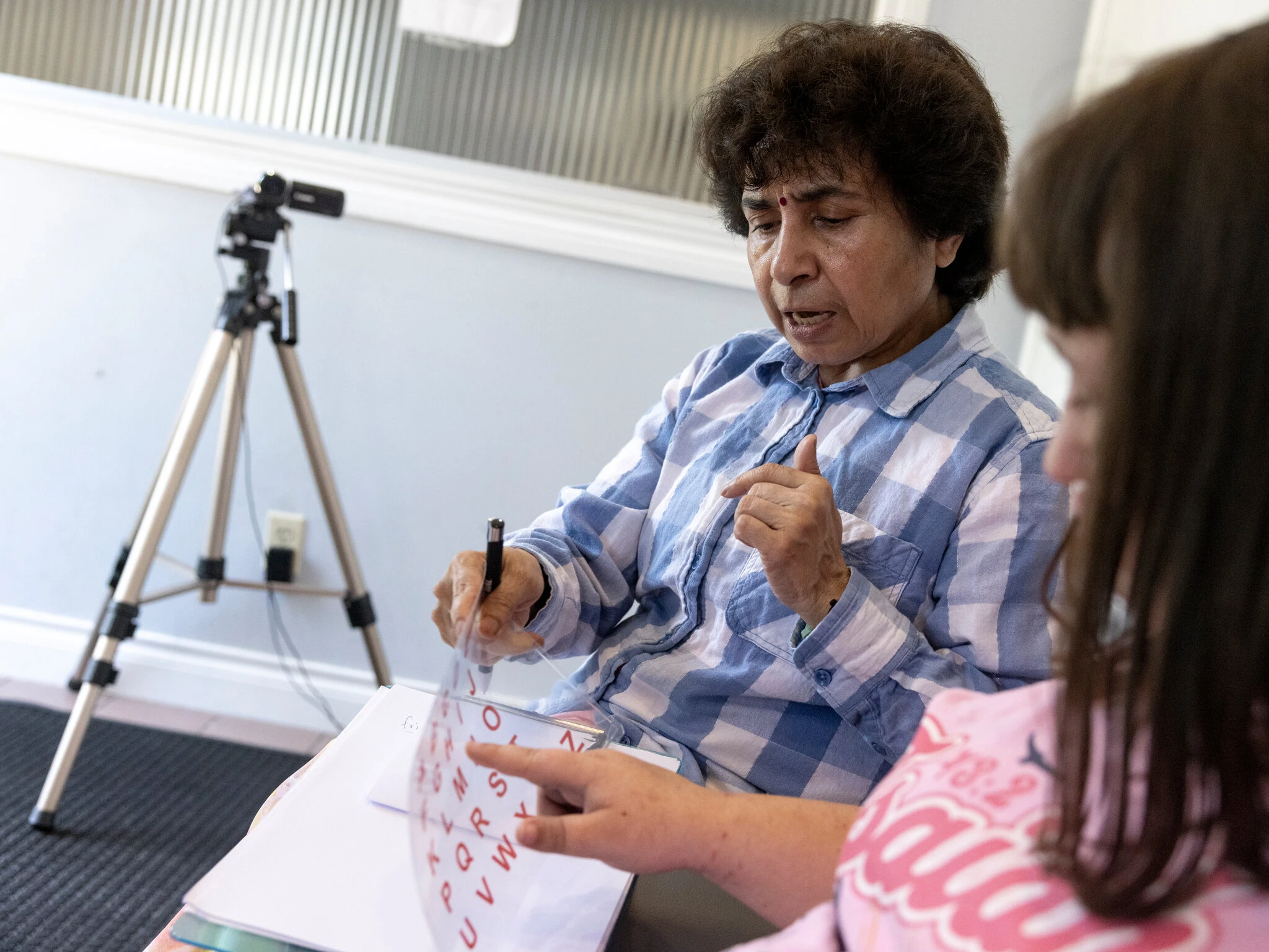
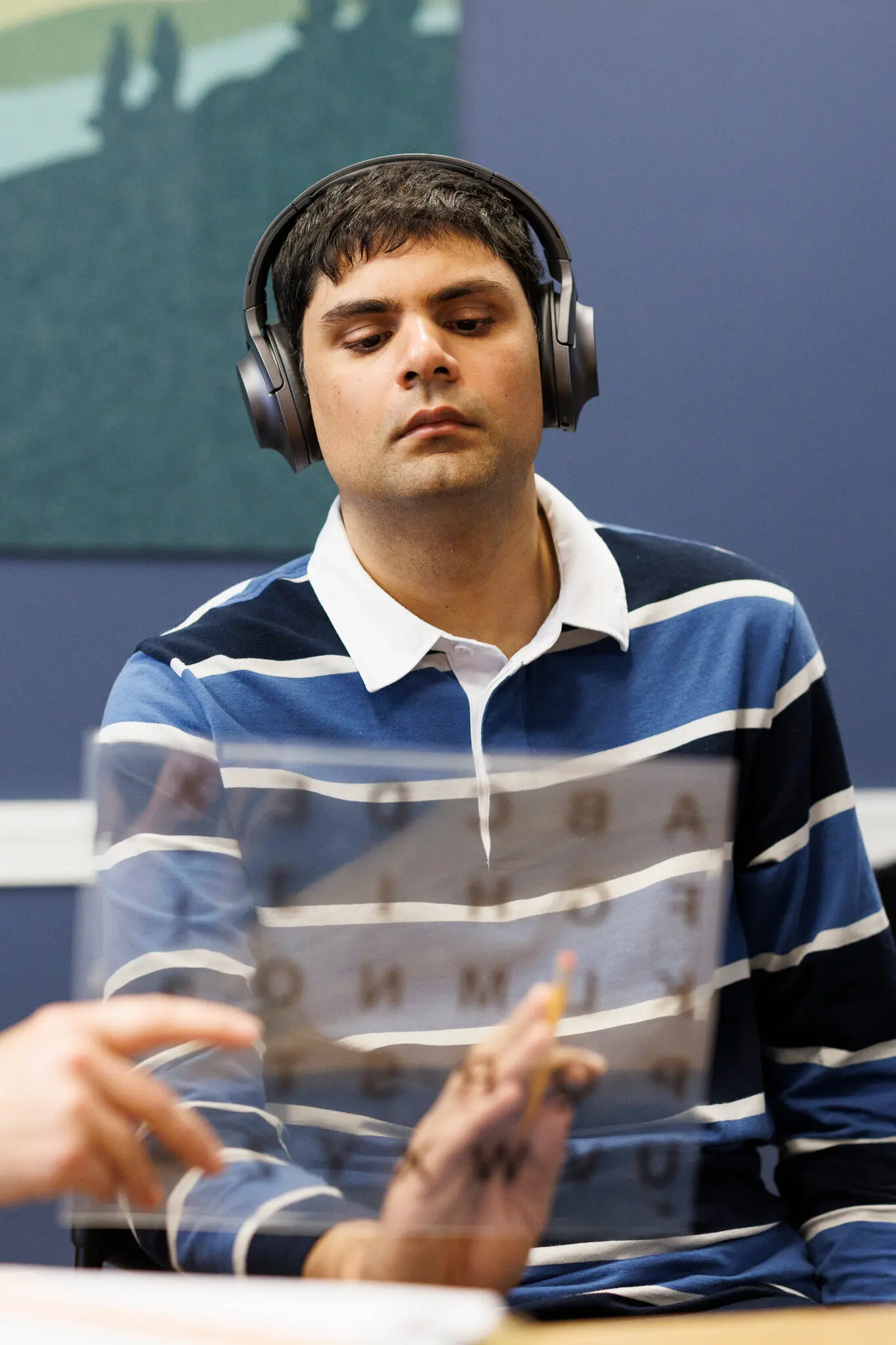
That possibility is driving renewed interest in assisted spelling, a group of communication methods in which a person points to letters on a board held by a trained partner. Supporters describe extraordinary results: individuals previously assumed to have significant intellectual disabilities composing complex sentences, attending college, and sharing their inner lives for the first time.
But the same methods have also raised a difficult question: Who is truly authoring the words?
A recent New York Times investigation by science reporter Azeen Ghorayshi, “An Autism Breakthrough, or an Illusion? The Fight Over Assisted Spelling,” examines this emotionally charged debate. Ghorayshi observed assisted-spelling sessions and interviewed families, practitioners, neuroscientists, and autism experts.
The Promise—and the Uncertainty
Supporters believe that some nonspeaking autistic people have intact language and cognitive abilities that are hidden by motor-planning or sensory challenges. From this perspective, difficulty speaking does not necessarily mean difficulty thinking or understanding.
A person’s intelligence, personality, and potential should never be judged solely by how much they speak.
Yet recognizing hidden potential does not automatically validate every communication method. Assisted spelling typically requires another person to hold or move the letter board. Even without physical contact, that partner may unintentionally influence a response through the board’s position, movement, facial expressions, or other subtle cues.
This concern is rooted in the history of facilitated communication, a method popularized in the 1990s. In controlled “message-passing” tests, researchers frequently found that answers reflected what the facilitator knew—not what the nonspeaking person had seen. In some cases, unverified messages resulted in devastating accusations and legal consequences.
Newer assisted-spelling practitioners argue that their methods are different because they do not physically guide the person’s hand.
However, as the Times reports, independent authorship has received remarkably little rigorous study. Practitioners’ reluctance to participate in blinded testing has intensified researchers’ concerns.
Protecting The Non Speaking Individual’s Voice
Respecting a child’s potential does not mean accepting every method that promises to reveal it. Families deserve communication supports grounded in credible evidence, especially when the resulting messages could affect medical care, consent, safety, education, or allegations of abuse.
Spelling to Communicate is not currently an evidence-based communication method. The American Speech-Language-Hearing Association does not recommend it, citing prompt dependence, a lack of scientific validity, and the risk that a communication partner may influence the messages. ASHA’s position specifically applies to Rapid Prompting Method, letterboarding, and Spelling to Communicate, regardless of the name used.
The American Association on Intellectual and Developmental Disabilities similarly does not support these facilitator-dependent methods. Controlled testing of the closely related practice of facilitated communication repeatedly found that messages were authored by facilitators rather than the people with disabilities.
Spelling to Communicate has not produced the rigorous, independent authorship evidence needed to overcome the same fundamental concern.
That distinction is the lynchpin of the New York Times piece.
A message should not be attributed to a nonspeaking person simply because it was produced in their presence. Doing so can misrepresent their preferences, replace their actual voice, and lead families away from communication approaches with stronger scientific support.
Evidence-based augmentative and alternative communication, or AAC, offers a better path.
AAC may include pictures, gestures, communication boards, eye-gaze systems, or speech-generating devices, selected to meet the individual’s sensory, motor, cognitive, and language needs. Prompts may be used during instruction, but the goal is always to build communication that is consistent and autonomous.
Every child deserves to be treated with dignity and assumed to have something worth communicating. They also deserve protection from methods that may allow another person, however unintentionally, to speak for them.
The goal is not merely to produce impressive sentences.
It’s to ensure that the words genuinely belong to the person communicating.
All About Kids is dedicated to making a difference in the lives of children and families who need our help. If you are interested in our services (SLP, ABA, PT, OT, SEIT, Evaluations), please contact us below:
AAK Parent/Guardian Contact Form
If you’re a provider (SLP, ABA, PT, OT, CF, SEIT, LMHC, SPED) who wants to do meaningful work with a supportive team, we’d love to connect with you at All About Kids.
Explore current opportunities and learn more about joining our team here: AAK Career Page